
What Is Manufacturing Know-How?
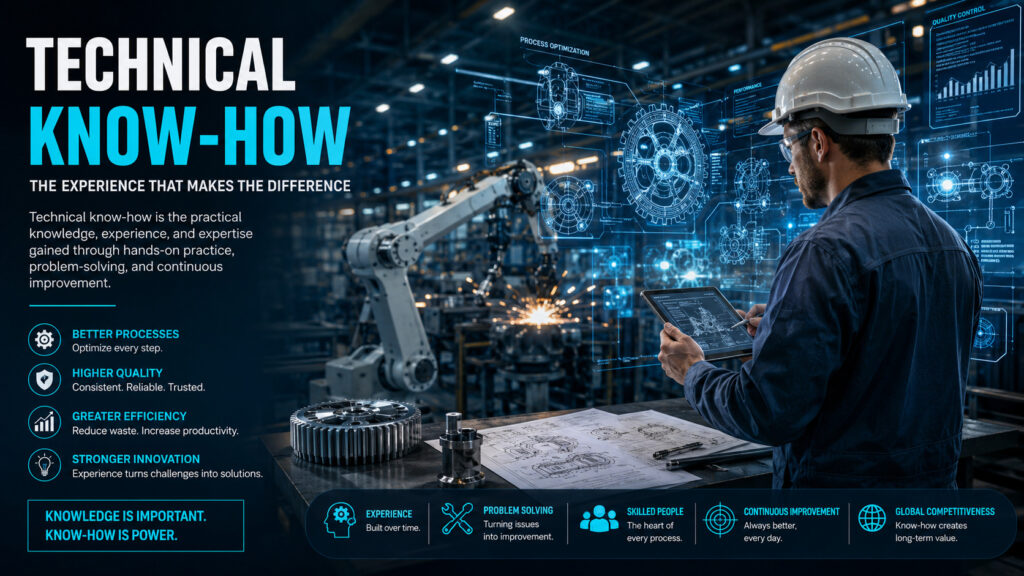
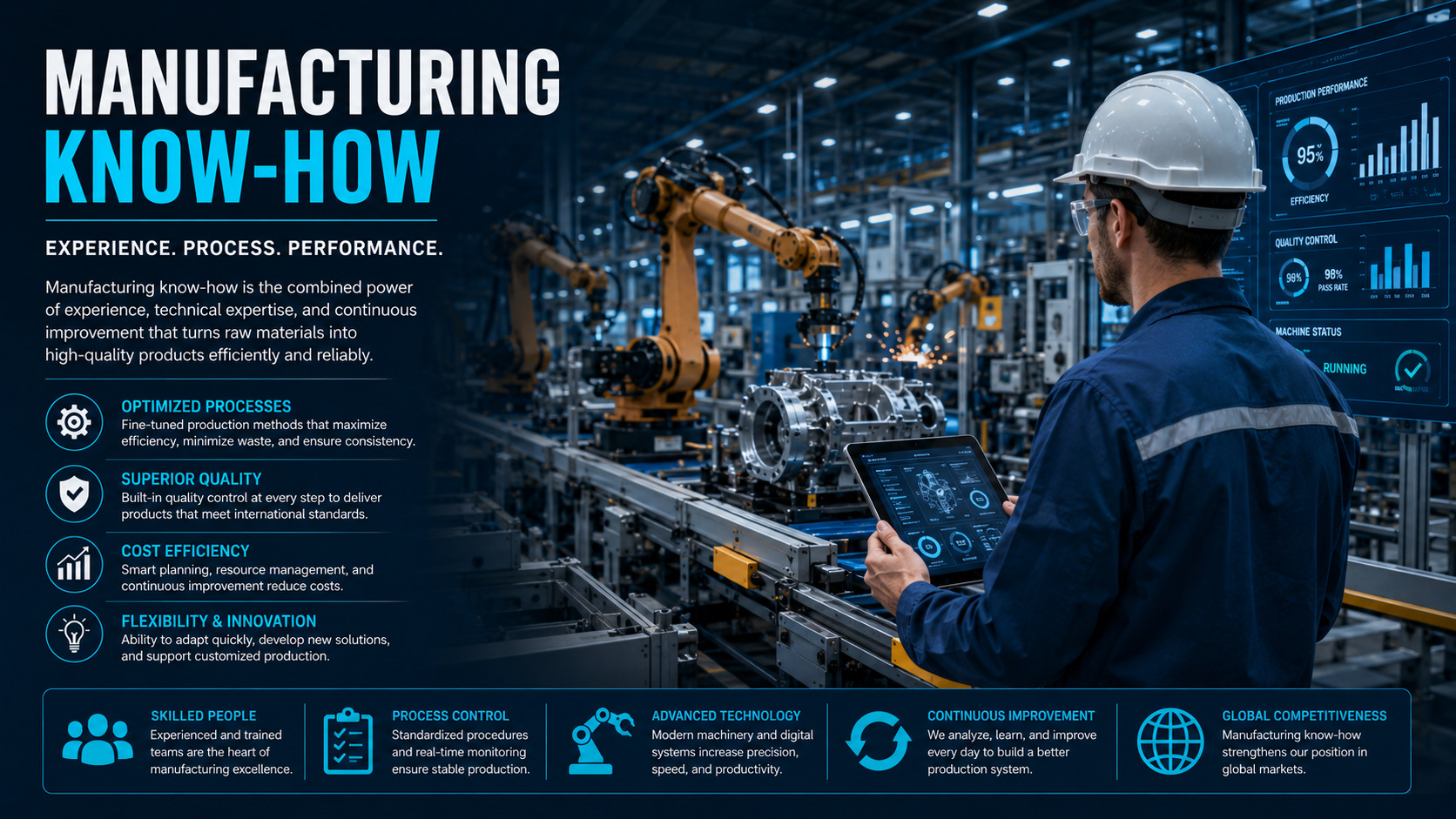
Manufacturing know-how is the accumulated practical knowledge, technical expertise, and production experience that enable a company to manufacture products efficiently, consistently, and to a high standard of quality.
It goes beyond machinery and production equipment. Manufacturing know-how represents the combination of engineering skills, optimized production methods, process control, quality assurance, and continuous improvement developed over years of industrial experience.
In modern manufacturing, know-how is one of the most valuable competitive assets an organization can possess.
More Than a Production Process
A production line can be replicated, and machinery can be purchased, but manufacturing excellence depends on how effectively those resources are utilized.
Manufacturing know-how includes:
- Production planning and workflow optimization
- Machine setup and calibration
- Material handling techniques
- Process parameter optimization
- Quality inspection procedures
- Preventive maintenance practices
- Production scheduling
- Waste reduction strategies
- Continuous process improvement
These elements work together to achieve consistent product quality while maximizing operational efficiency.
Why Manufacturing Know-How Matters
Strong manufacturing know-how provides significant business advantages, including:
- Higher product consistency
- Improved production efficiency
- Lower manufacturing costs
- Reduced material waste
- Faster production cycles
- Better workplace safety
- Increased equipment reliability
- Greater customer confidence
Organizations with advanced manufacturing expertise are better equipped to respond to changing market demands and maintain long-term competitiveness.
Manufacturing Know-How and Product Quality
Quality is not created solely through inspections at the end of production. It is built into every stage of the manufacturing process.
Experienced manufacturers understand how small adjustments in machine settings, environmental conditions, material selection, and production sequencing can significantly influence the final product.
This practical understanding enables companies to deliver products that consistently meet customer expectations and international quality standards.
Supporting Innovation Through Experience
Innovation in manufacturing is often driven by practical experience rather than theory alone.
Companies with extensive manufacturing know-how can:
- Introduce new production methods
- Improve existing manufacturing processes
- Reduce production lead times
- Increase automation efficiency
- Develop customized production solutions
- Adapt quickly to new materials and technologies
Every production challenge becomes an opportunity to improve future performance.
Manufacturing Know-How in Global Markets
International customers increasingly seek suppliers capable of delivering reliable quality, stable production capacity, and technical competence.
Manufacturing know-how enables companies to:
- Meet international specifications
- Comply with industry regulations
- Produce customized products
- Support OEM and private-label manufacturing
- Improve delivery reliability
- Maintain consistent quality across large production volumes
These capabilities strengthen long-term partnerships in global supply chains.
Preserving Manufacturing Expertise
Manufacturing knowledge develops over years of practical experience and should be carefully preserved.
Successful companies invest in:
- Employee training programs
- Standard operating procedures
- Digital production documentation
- Knowledge-sharing systems
- Cross-functional collaboration
- Continuous improvement initiatives
- Mentorship between experienced and new employees
Capturing and transferring manufacturing expertise ensures operational continuity and sustainable growth.
Manufacturing Know-How in the Era of Smart Factories
Automation, robotics, artificial intelligence, and Industry 4.0 technologies are transforming manufacturing worldwide.
However, smart machines still depend on skilled professionals who understand production processes, interpret performance data, and optimize operations.
The most successful manufacturers combine advanced technology with deep manufacturing know-how to achieve higher productivity, flexibility, and innovation.
Conclusion
Manufacturing know-how is the practical intelligence behind successful production.
It transforms equipment into efficient manufacturing systems, ideas into reliable products, and experience into lasting competitive advantage.
As global industries continue to evolve, companies that invest in developing, protecting, and continuously improving their manufacturing know-how will remain stronger, more adaptable, and better prepared for future challenges.