
What Is Technical Know-How?
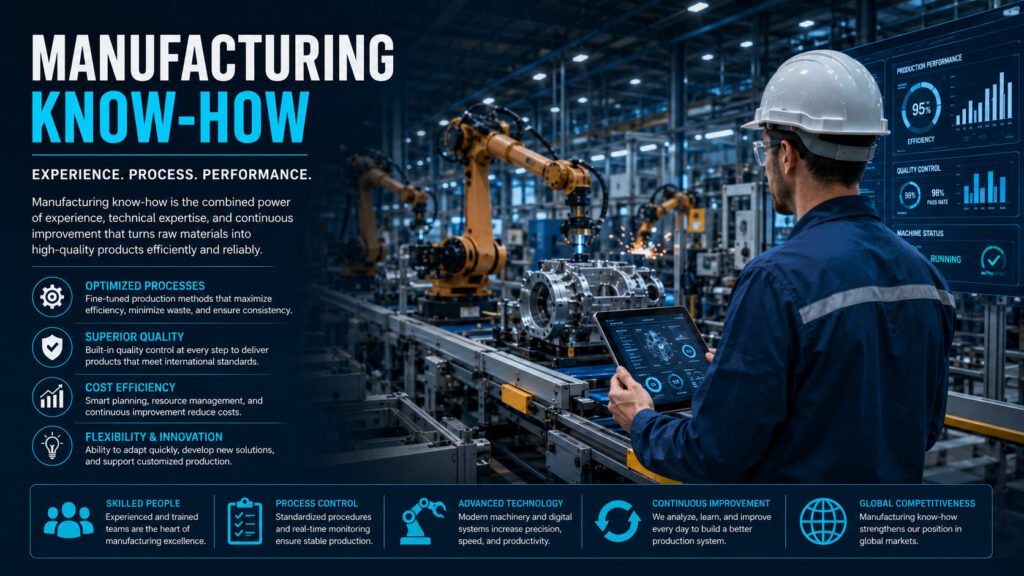
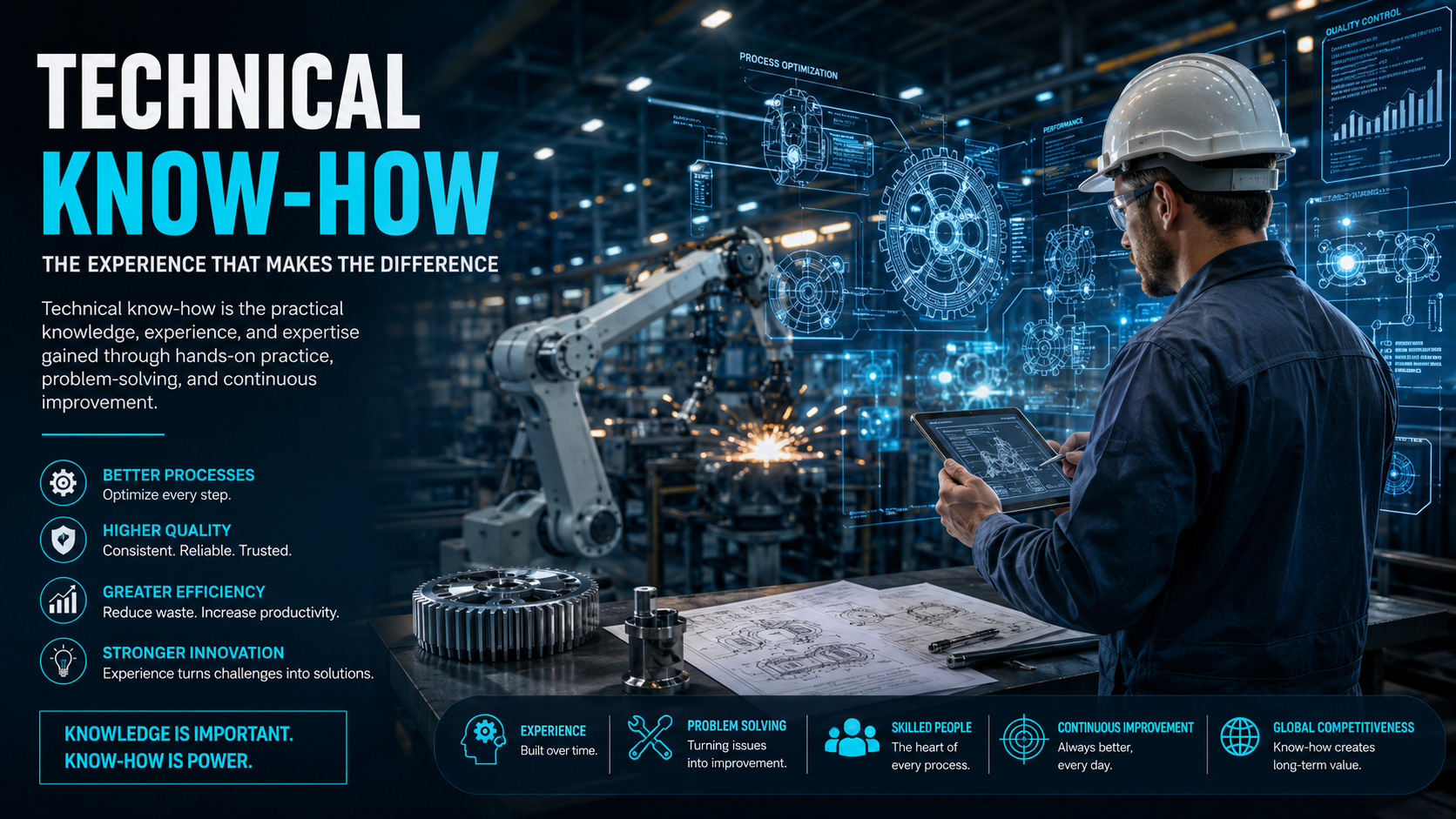
Technical know-how is the practical knowledge, experience, and expertise required to perform a task efficiently and consistently. Unlike theoretical knowledge, technical know-how is gained through years of hands-on experience, continuous improvement, testing, and problem-solving.
It includes not only what to do, but also how, when, and why to do it.
In today’s highly competitive global market, technical know-how has become one of the most valuable intangible assets for manufacturers, exporters, engineering companies, and industrial organizations.
Beyond Documentation
Many companies believe that technical knowledge can be completely documented in manuals, drawings, or operating procedures. While documentation is essential, it rarely captures the countless practical details learned through real-world experience.
For example:
- Optimizing machine settings for different materials.
- Reducing production defects through process adjustments.
- Selecting the right tooling for specific applications.
- Troubleshooting unexpected manufacturing problems.
- Improving production speed without compromising quality.
These skills often exist in the experience of engineers, technicians, and operators rather than in written documents.
Why Technical Know-How Matters
Organizations with strong technical know-how benefit from:
- Higher product quality
- Increased production efficiency
- Lower operational costs
- Faster problem-solving
- Better innovation capability
- Greater customer satisfaction
- Sustainable competitive advantage
Companies that continuously develop and protect their know-how are generally more resilient in changing market conditions.
Technical Know-How in International Trade
In international trade, buyers increasingly evaluate suppliers based on more than price. They seek partners capable of delivering reliable quality, consistent production, and engineering support.
Technical know-how enables manufacturers to:
- Customize products for different markets.
- Meet international quality standards.
- Adapt quickly to customer requirements.
- Improve manufacturing flexibility.
- Support clients with technical guidance.
- Reduce production risks.
For many industrial sectors, know-how is often a stronger competitive advantage than equipment alone.
The Difference Between Technology and Know-How
Technology and know-how are closely related but fundamentally different.
Technology refers to machines, software, production systems, patents, and equipment.
Technical know-how refers to the human expertise required to use those technologies effectively.
Two companies may own identical machinery, yet produce products with significantly different quality levels. The difference often lies in the experience, skills, and accumulated knowledge of their workforce.
Building Technical Know-How
Technical know-how is developed through continuous learning rather than acquired overnight.
Successful organizations invest in:
- Employee training
- Research and development
- Process optimization
- Quality management systems
- Cross-functional collaboration
- Knowledge sharing
- Continuous improvement initiatives
Every solved production challenge becomes part of the company’s growing knowledge base.
Protecting Valuable Know-How
Because technical know-how represents years of investment, organizations should actively protect it.
Common protection strategies include:
- Confidentiality agreements
- Internal documentation systems
- Employee training programs
- Knowledge transfer procedures
- Intellectual property management
- Controlled access to sensitive processes
Retaining experienced personnel and systematically transferring their expertise to new employees is equally important.
Technical Know-How in the Digital Era
Industry 4.0, automation, artificial intelligence, and digital manufacturing are transforming industrial operations. However, advanced technologies cannot replace practical engineering judgment.
Modern organizations increasingly combine digital tools with human expertise to optimize production, improve quality, and accelerate innovation.
Artificial intelligence can analyze data, but experienced professionals still interpret complex situations, make critical decisions, and adapt processes to real-world conditions.
Conclusion
Technical know-how is far more than technical information—it is the accumulated experience that transforms knowledge into reliable performance.
Whether in manufacturing, engineering, maintenance, automation, or international trade, organizations that cultivate, protect, and continuously expand their technical know-how position themselves for long-term success.
In an increasingly competitive global economy, machines can be purchased, software can be licensed, and technologies can be replicated. Genuine technical know-how, however, is developed over time and remains one of the most valuable assets a company can possess.